
How AI and Security Operations Centers Are Reshaping Cybersecurity: Insights from Eagle Information Systems CEO Subir Sangal
Cybersecurity is no longer just an IT concern; it is a critical business priority. As organizations increasingly depend on cloud applications, digital platforms, connected devices, and online transactions, the risk of cyberattacks continues to grow. Businesses today face an evolving threat landscape where identifying and responding to security incidents quickly can make the difference between business continuity and significant operational disruption.
Artificial Intelligence (AI) is emerging as a powerful enabler in addressing these challenges. By automating repetitive security tasks, analyzing large volumes of data, and helping security teams identify potential threats faster, AI is transforming how Security Operations Centers (SOCs) operate.
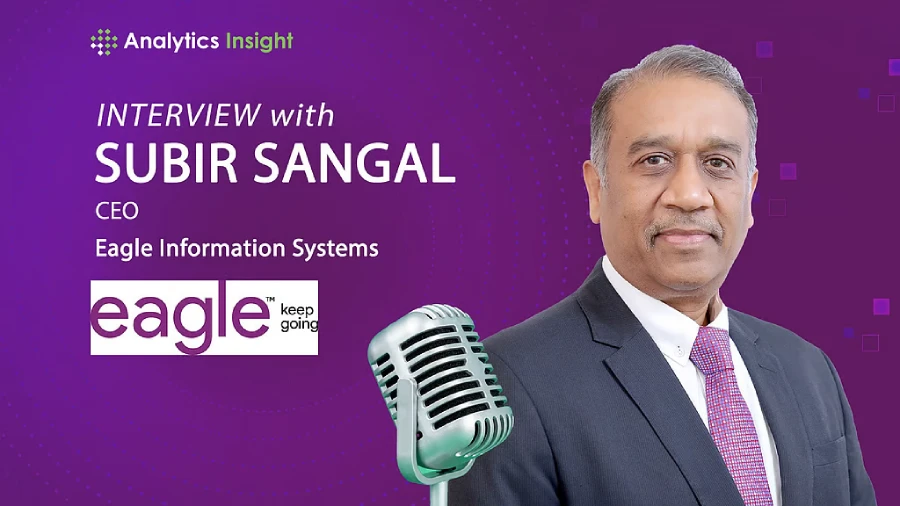
In a recent episode of the Analytics Insight Podcast, Subir Sangal, CEO and Co-founder of Eagle, shared his insights on how AI is reshaping cybersecurity, the growing importance of SOCs, and what the future holds for security operations.
Why Cybersecurity Needs a Smarter Approach
Modern IT environments generate enormous volumes of security events every day. Every endpoint, firewall, email system, cloud application, and network device produces information about its activities. The challenge is not simply collecting this information but identifying which events indicate normal activity and which could represent a potential cyber threat.
As discussed by Subir Sangal, even a single computer can generate tens of thousands of events daily. When an organization operates hundreds or thousands of devices, the volume of security data can quickly reach millions of events. Manually analyzing such large volumes of information is time-consuming and inefficient. Security teams need a smarter approach that helps them distinguish genuine threats from routine activities.
This is where AI-powered cybersecurity and Security Operations Center (SOCs) play an increasingly important role. By helping security teams analyze large volumes of data and identify potential threats more efficiently, AI enables smarter and more effective security operations.
The Growing Importance of 24×7 SOC Monitoring
Cyberattacks do not follow business hours. An organization’s website, cloud infrastructure, email systems, and business applications remain accessible even when employees are away from their desks. Without continuous monitoring, suspicious activities occurring outside working hours may go unnoticed until they cause significant damage.
A Security Operations Centre (SOC) addresses this challenge by bringing together security monitoring, threat detection, investigation, and incident response under a coordinated framework. A SOC continuously monitors an organization’s IT infrastructure, including desktops, laptops, employee endpoints, firewalls, network infrastructure, cloud environments, business applications, email systems, digital platforms, and other connected IT assets.
The objective is to identify suspicious activities, investigate potential threats, and initiate appropriate responses before incidents disrupt business operations. For organizations that depend on uninterrupted digital services, 24×7 SOC monitoring is becoming an essential part of their cybersecurity strategy.
How AI Helps SOCs Overcome Alert Overload
One of the biggest challenges faced by traditional SOC teams is alert overload.
When multiple security tools generate thousands or even millions of events, identifying genuine threats becomes difficult. Security analysts may spend considerable time investigating false positives and routine activities instead of focusing on critical security incidents.
AI and automation can significantly improve this process.
By analysing event patterns, applying predefined rules, identifying anomalies, and filtering unnecessary alerts, AI helps reduce the workload on security analysts.
As highlighted by Subir Sangal during the podcast, the objective is to narrow millions of daily events down to a much smaller number of meaningful alerts that require human investigation.
AI can help SOC teams:
- Reduce False Positives: Filter routine and irrelevant security events to minimize unnecessary alerts.
- Improve Threat Detection: Identify suspicious patterns and potentially malicious activities more efficiently.
- Accelerate Incident Response: Support faster responses through automated workflows and predefined security playbooks.
- Improve Analyst Productivity: Allow security professionals to focus on investigating critical threats rather than manually reviewing every event.
Ultimately, AI helps transform raw security data into actionable security intelligence.
AI vs. Human Expertise: Why Both Matter in Cybersecurity
While AI is transforming cybersecurity operations, human expertise remains essential.
AI systems can analyze data, identify patterns, and execute predefined response actions. However, understanding complex attack scenarios, assessing business risks, and making critical security decisions still require experienced cybersecurity professionals.
During the conversation, Subir Sangal highlighted the importance of preparing for different attack scenarios and developing response playbooks.
These playbooks define how security systems should respond to threats such as:
- Distributed Denial-of-Service (DDoS) attacks.
- Brute-force attacks.
- Phishing campaigns.
- Suspicious login attempts.
- Other malicious activities.
AI agents can support these predefined response processes, helping organizations automate selected security actions.
However, human oversight is necessary to evaluate unusual incidents, review automated decisions, and continuously improve security strategies.
The future of cybersecurity will therefore depend on a balanced approach that combines AI-driven automation with human intelligence and experience.
Preparing for the Next Generation of AI-Driven Cyberattacks
AI is not only strengthening cybersecurity defenses; it is also creating new opportunities for cybercriminals.
Attackers can use AI to automate malicious activities, improve phishing campaigns, and increase the speed and scale of their attacks.
This makes it increasingly important for organizations to develop proactive security strategies.
As discussed in the podcast, organizations must anticipate potential attack scenarios, establish appropriate response mechanisms, and continuously improve their security playbooks.
By learning from previous incidents and using those insights to strengthen detection rules and response processes, SOC teams can become better prepared for emerging threats.
The focus must shift from simply reacting to security incidents towards anticipating, detecting, and responding to threats more effectively.
Measuring SOC Performance: Beyond the Number of Alerts
Having a SOC in place does not automatically mean an organization is secure. Businesses need to evaluate whether their security operations are delivering meaningful results.
Subir Sangal emphasized that business continuity should remain the ultimate objective of cybersecurity.
Organizations should look beyond the number of alerts generated or investigated and focus on measurable security outcomes, including:
- Threat Detection Efficiency: How effectively can the SOC identify genuine threats among large volumes of security events?
- Response Time: How quickly can security teams investigate and respond to potential incidents?
- Automation Effectiveness: How many genuine security incidents can be addressed through automated workflows?
- Business Continuity: How effectively can the organization prevent or minimize operational disruption caused by cyberattacks?
Technologies such as Security Information and Event Management (SIEM) and Security Orchestration, Automation and Response (SOAR) help support these objectives by collecting security information, correlating events, and automating selected response activities.
A successful SOC should ultimately demonstrate its ability to reduce organizational risk and strengthen business resilience.
Why SMEs Cannot Afford to Ignore Cybersecurity
Cybersecurity is often perceived as a capability reserved for large enterprises with dedicated IT security teams and substantial budgets.
However, small and medium-sized enterprises (SMEs) face many of the same cyber risks.
Automated scanning tools can identify vulnerable systems across the internet, meaning attackers do not necessarily need to target a specific organization to discover security weaknesses.
For an SME, a ransomware attack, data breach, or prolonged service disruption can have serious financial and operational consequences.
During the podcast, Subir Sangal highlighted the importance of making cybersecurity accessible to SMEs. He also discussed an illustrative starting budget of approximately ₹20,000 to ₹50,000 per month for certain smaller businesses, depending on their security requirements.
The key message is that organizations do not need to implement every advanced security solution immediately. They should begin by identifying vulnerabilities, establishing essential security controls, and building a cybersecurity strategy that aligns with their business requirements.
Cybersecurity should be viewed as a business investment rather than an optional IT expense.
What Does the Future of SOCs Look Like?
The future of the Security Operations Center will increasingly involve AI, automation, and advanced analytics.
Subir Sangal expects routine SOC activities to become significantly more automated over the next five years. During the discussion, he shared his outlook that human involvement in certain aspects of SOC operations could potentially reduce to 5–10% as AI capabilities advance.
This represents a vision for increasingly autonomous security operations, where AI agents can handle routine monitoring, alert analysis, and predefined response activities.
However, this transformation will require:
- Better preparation for emerging cyberattack scenarios.
- Well-defined security response playbooks.
- Continuous training and improvement of AI systems.
- Effective integration of security technologies.
- Appropriate human oversight and accountability.
The future SOC will not simply be about reducing human involvement. It will be about enabling cybersecurity professionals to focus their expertise where it matters most while AI handles repetitive and time-consuming activities.
Building a More Resilient Cybersecurity Future with Eagle Information Systems
At Eagle Information Systems, we believe that effective cybersecurity is fundamental to business continuity.
With more than three decades of experience in IT services and managed services, we understand the importance of keeping business IT environments secure, reliable, and operational.
As cyber threats continue to evolve, organizations need a proactive cybersecurity approach that combines continuous monitoring, intelligent threat detection, automation, and expert intervention.
Our focus is on helping organizations strengthen their security posture and make cybersecurity more accessible, including for SMEs that may not have dedicated in-house security teams.
The growing integration of AI into SOC operations represents an important step towards making security monitoring more efficient, responsive, and scalable.
As Subir Sangal highlighted in the Analytics Insight Podcast, the future of cybersecurity lies in bringing together the capabilities of AI and the expertise of people to protect businesses against an increasingly complex threat landscape.
Because cybersecurity is not just about preventing attacks. It is about ensuring that businesses can keep going.
Listen to the Full Podcast
Want to hear more about how AI is transforming cybersecurity, the evolution of SOCs, and the future of intelligent security operations?
Listen to the full conversation featuring Subir Sangal, CEO and Co-founder of Eagle Information Systems, on the Analytics Insight Podcast.
Watch and listen to the full discussion: