Eagle

Manufacturing Cybersecurity: Keeping Your Business Safe and Running

Cybersecurity Services VAPT Services Threat Hunting SOC Monitoring

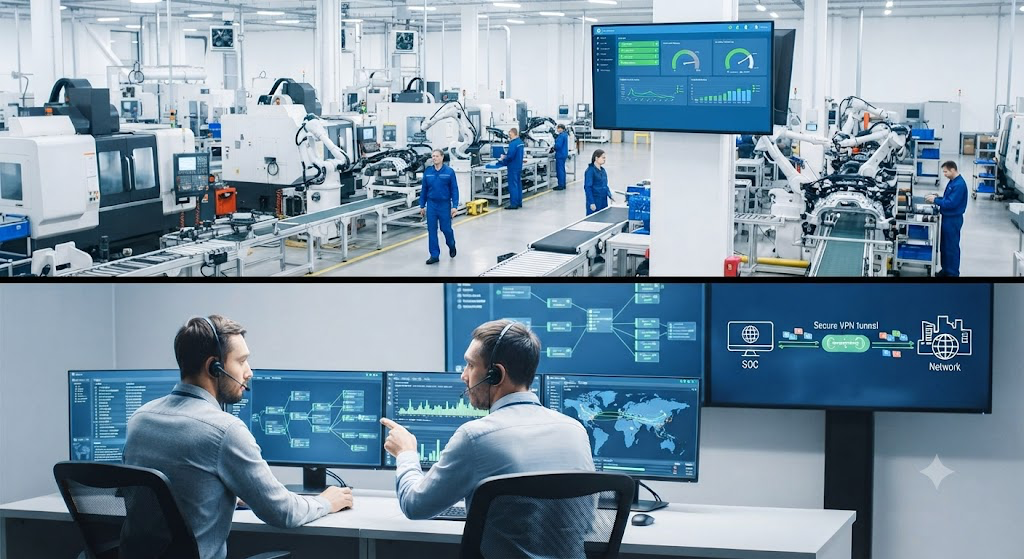
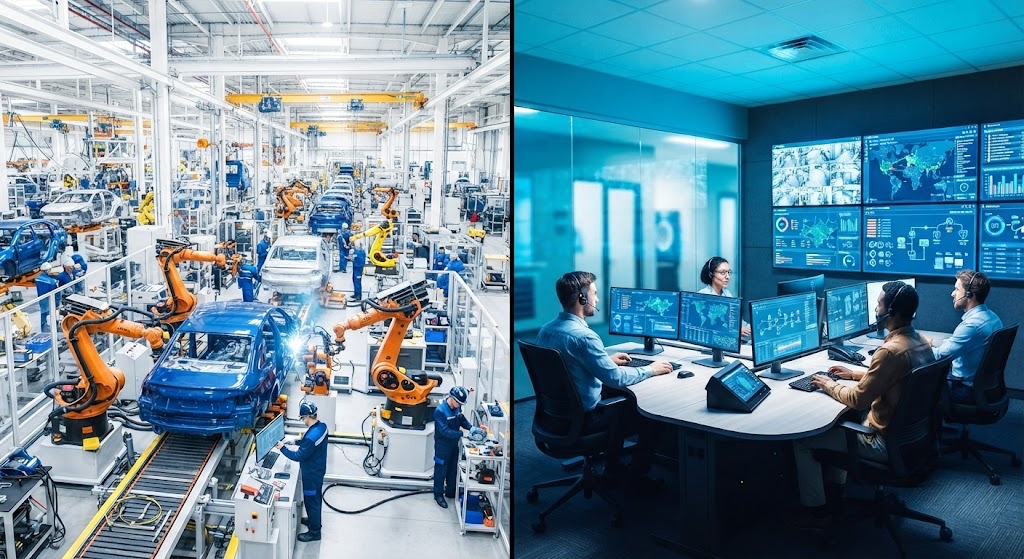
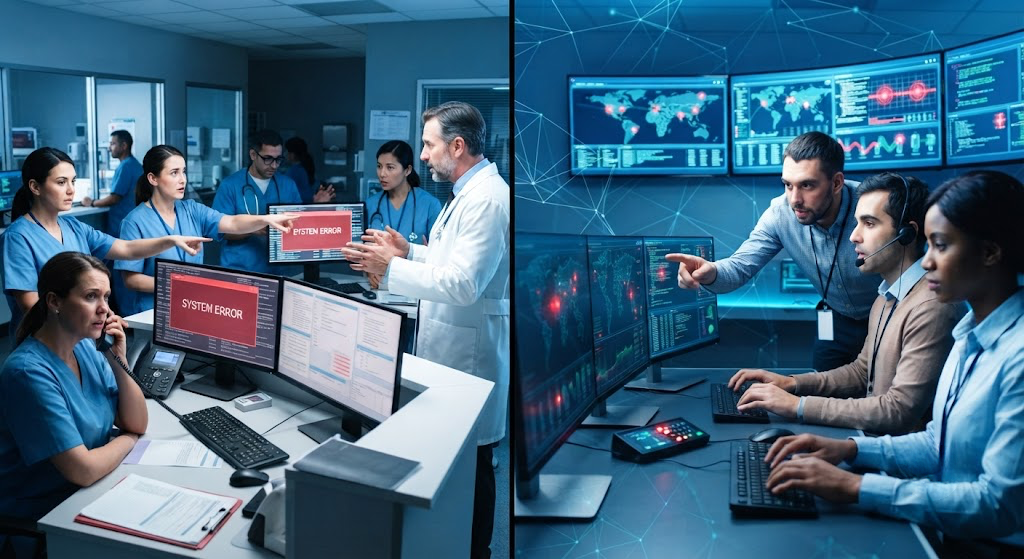
  Manufacturing is getting more and more connected. Technology is now a key pillar to maintaining productivity in factories, from Industrial IoT (IIoT) and smart machinery to cloud applications, ERP systems, remote access, and digitally integrated supply chains. However, this connectivity also expands the attack surface for cybersecurity. Unlike many other industries, manufacturing cannot afford prolonged downtime. A cyberattack can disrupt production, logistics, supply chains, and customer deliveries. In India, the concern is significant: the India Ransomware Report 2024 identified manufacturing as the most targeted sector for ransomware attacks, ahead of finance and IT/ITeS. For manufacturers, cybersecurity must therefore go beyond protecting data and devices. The priority is building cyber resilience—the ability to detect threats, contain incidents, recover critical systems, and continue operations even when an attack succeeds. This is where cybersecurity companies can help manufacturers develop a more proactive security posture. Cybersecurity in Manufacturing Is Different Manufacturing environments combine traditional IT infrastructure with Operational Technology (OT), production equipment, PLCs, engineering workstations, and connected devices. As IT and OT converge, a compromise in one environment can potentially affect another, making security more complex than in conventional IT environments. The risk grows as factories adopt remote monitoring, cloud platforms, third-party applications, and connected supply chains. An employee account that has been compromised, an exposed endpoint, or a supplier connection can provide an entry point to the wider environment. This makes strong network security an essential part of cybersecurity, helping manufacturers reduce their exposure to cyber threats. Manufacturers must also protect product designs, engineering specifications, intellectual property, customer information, and business data. Data Loss Prevention (DLP), Endpoint security and appropriate access controls can help reduce the consequences of unauthorized access and data leakage. Moving Beyond Traditional Cybersecurity Preventing every cyberattack is impossible. The more important objective is ensuring that a cyber incident does not bring the business to a standstill. This requires a shift from prevention alone to cyber resilience, preparedness, and rapid recovery. A strong organization must identify suspicious activity quickly, isolate affected systems, and restore critical operations. 24X7 SOC Monitoring, SIEM, SOAR, EDR/XDR, threat detection and Incident Response can provide the visibility and response mechanisms required to act before an incident becomes a prolonged operational crisis. Organizations must also identify weaknesses before attackers exploit them. Regular Vulnerability Assessment and Penetration Testing (VAPT), Web Application Penetration Testing, patch management, and security testing can help identify vulnerabilities across infrastructure, applications, networks, and exposed assets. The Foundation of a Defensible Manufacturing Environment As IT and OT become increasingly interconnected, network security and network segmentation are critical safeguards. Separating production networks, administrative systems, critical applications, and externally accessible environments can limit an attacker’s ability to move laterally. An effective network security system can help prevent threats from spreading across critical production environments. Organizations should consider network security services that include continuous monitoring, access controls, threat detection, and network visibility. Manufacturing environments also involve employees, contractors, vendors and remote users. Identity and Access Management (IAM), strong authentication, privileged access controls and a Zero Trust approach can reduce risks associated with stolen credentials. Email security services can further help detect and block phishing, malicious attachments and credential theft. Lessons from India’s Manufacturing Sector The risks are already visible in India. In May 2023, a large motorcycle manufacturing company in India reportedly halted production following a cyberattack, with reports estimating that more than 20,000 vehicles were affected by the disruption. The company confirmed that it had reported the incident to the relevant government department. In June 2026, another manufacturing company disclosed a ransomware attack affecting its systems. The company said it had implemented precautionary measures and protocols to contain and mitigate the incident. These incidents reinforce a critical lesson: cyber risk is operational risk. A successful attack can affect production, supply chains, customer commitments, and business continuity – not simply computers and data. Network security and cybersecurity must therefore be integrated into operational resilience and business planning. Building a Manufacturing Cyber Resilience Strategy Manufacturers should use a layered approach that includes prevention, detection, response, and recovery. This includes Vulnerability Assessment and Penetration Testing, web application penetration testing, risk assessment, network security, IAM, DLP, endpoint security, secure backups, and 24×7 SOC monitoring. Technology alone cannot create resilience. Organizations also need employee awareness, documented incident response processes, supplier security assessments, and recovery exercises. Email security services can further strengthen protection against common attack vectors. For organizations without extensive in-house security resources, managed security services can provide specialized expertise and continuous monitoring. By combining proactive security assessments with threat detection, incident response, network security services, and recovery planning, manufacturers can build a stronger security posture. Conclusion As Indian manufacturing becomes more connected, the boundary between cybersecurity and operational continuity is disappearing. A compromised endpoint, stolen credential, or vulnerable third-party connection can potentially become a production problem. The objective is not perfect protection but the ability to detect threats early, respond decisively, and recover quickly. Cyber resilience enables manufacturers to protect their systems while maintaining the continuity their customers and supply chains depend on. For the modern factory, cybersecurity is no longer just about protecting technology. It is about protecting production, protecting trust and keeping the business going.      

Why is a Security Operation Center (SOC) Needed?

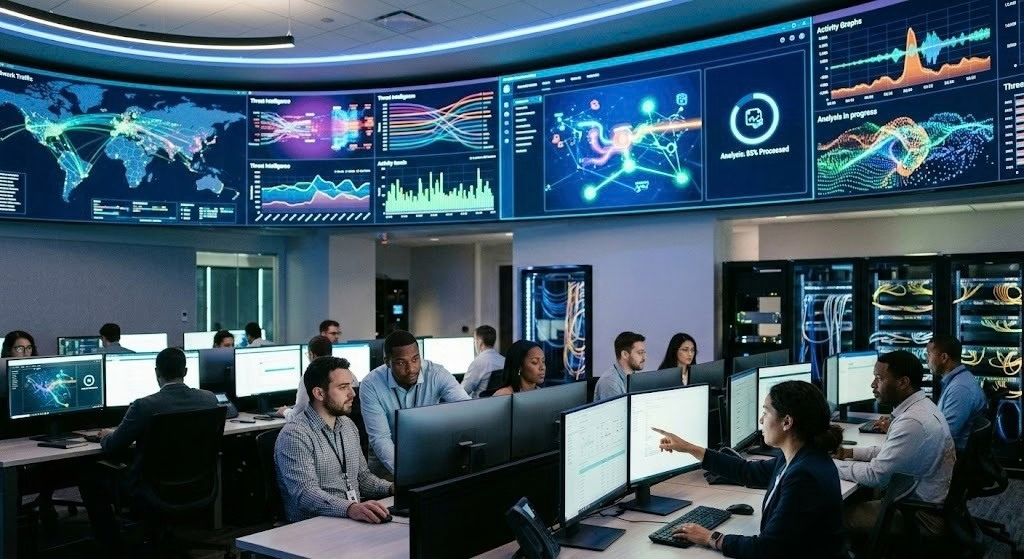
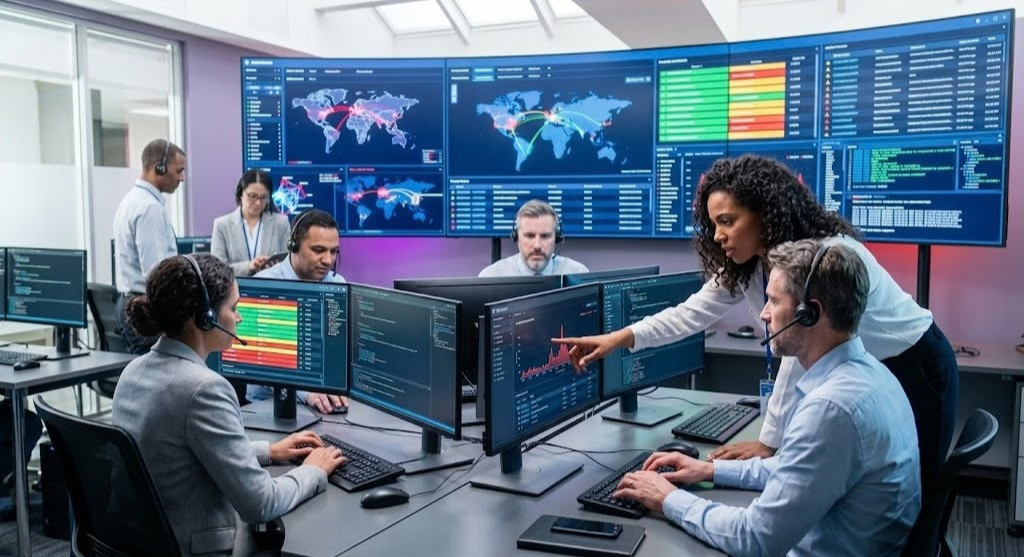
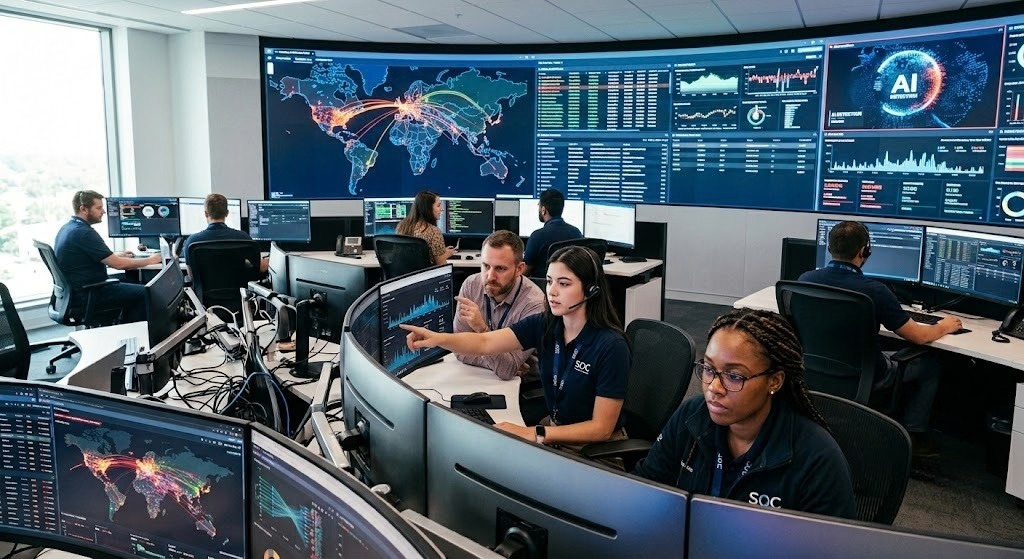
  What is a SOC? A modern SOC is not simply a room full of people looking at screens. With AI and automation, it can continuously analyze security data, identify unusual behavior, connect events that may appear unrelated, and help security teams prioritize threats that need immediate attention. For example, a suspicious login may not look dangerous on its own. But if the same account suddenly accesses sensitive data, downloads an unusual volume of files, and connects from an unfamiliar location, the combined activity can tell a very different story. This is where 24×7 SOC monitoring becomes valuable. It brings continuous visibility across Identity & Access Security Monitoring, Application Security Monitoring, Endpoint Detection & Response, Firewall Management, IDS/IPS Monitoring, Cloud Security Monitoring, Email Monitoring, and Data Loss Prevention. Businesses now have a better chance of spotting suspicious activity as it happens, instead of hearing about an incident after customers complain.   SOC provides 24×7 Monitoring  A cyberattack doesn’t have office hours. It can be 2 AM, a public holiday, or when your team is busy closing an important deal. Sometimes, the only warning you get is when sensitive data has already been stolen. In 2024, one of India’s largest cyberattacks targeted a popular cryptocurrency exchange, with hackers making away with digital assets valued at approximately ₹2,000 crore. The attack had hit about half of the estimated reserves on the platform and had affected millions of users. It was a sobering reminder of how cyber attacks can do much more than steal data and threaten thousands of crores in minutes. The issue is not whether a business can be attacked. The bigger question is how fast will someone know an attack is underway? This is where the AI-driven Security Operations Center comes in.   Who Needs 24×7 SOC Monitoring? It is easy to think that SOC monitoring is only for banks, large enterprises, or government organizations. It is not. A sole entrepreneur may hold valuable customer information and intellectual property. An SME may depend on cloud applications, email, and online payments. A large organization may have thousands of employees, applications, and third-party connections to monitor. The size of the business does not determine the value of its data. In 2025, an Indian carsharing platform confirmed that hackers gained unauthorized access to its information systems, affecting data belonging to about 84 lakh users, including names, phone numbers, and vehicle registration details. Smaller businesses face risks too. In 2024, a leading IT company was hit by ransomware, forcing nearly 300 small Indian banks offline and disrupting UPI, ATM, and other payment services. The incident affected around 0.5% of India’s payment system volume. Whether you are a sole entrepreneur, an SME, or a large company, protecting customer information is not only about protecting data but also about protecting trust and business continuity.   The Role of AI in SOC Monitoring  The biggest advantage of an AI-driven SOC is not simply that it watches more systems. It can help security teams make sense of more information faster. Consider what happened in 2025 to a Bengaluru-based technology company. The company reported that cryptocurrency worth around ₹384 crore was stolen after attackers compromised a wallet. An internal investigation found that an employee’s laptop had been hacked. A SOC cannot guarantee that an attack will never happen. But continuous monitoring, endpoint detection, identity monitoring, and behavioral analysis can help organizations identify unusual activity earlier. This is where Vulnerability Assessment & Penetration Testing (VAPT), Proactive Threat Hunting, Security Information and Event Management (SIEM) and Security Orchestration, Automation & Response (SOAR)  become important. They help identify weaknesses, search for hidden threats, and automate appropriate responses. The objective is simple: detect earlier, understand faster, and respond better.   Key Considerations When Choosing a SOC  Before choosing a SOC, businesses should look beyond the word “24×7.” Ask what is actually being monitored, how alerts are investigated, how quickly incidents are escalated, and whether the SOC can integrate with the technologies already being used. Security does not stop when an alert is raised. A serious incident may require an Incident Response Retainer, Digital Forensics & Investigation, or Threat Intelligence & IR Advisory to understand what happened, what was affected, and what should happen next. Businesses should also consider Security Policy & Governance Advisory and Security Awareness & Phishing Simulation. Technology can detect suspicious behavior, but employees remain an important part of the security chain. The right SOC should fit the business, its risks, technology, and people—not simply sell a list of tools. Compliance is good; continuous monitoring is better! Compliance matters. But compliance should not be the finish line. A business may meet a regulatory requirement and still have an employee clicking on a phishing email at midnight. It may have policies in place but not know that a cybercriminal is moving through its network. It may have security tools, but nobody is actively watching the alerts. Compliance tells you what you need to have in place. Continuous monitoring helps you understand what is actually happening. One is about meeting a requirement; the other is about being prepared when something goes wrong.   The Future of Cybersecurity The threat landscape is changing quickly. Attackers are using automation, social engineering, and AI to make attacks faster and more convincing. Businesses are also adopting AI, cloud applications, and connected systems at an equally rapid pace. That means cybersecurity cannot remain a once-a-year assessment. It needs to become continuous. The future will belong to security operations that combine AI, human expertise, and automation. AI can process the enormous volume of signals generated by modern environments. Human analysts bring judgement, context, and decision-making when something genuinely serious happens. At Eagle, we believe technology should make organizations stronger, simpler, and more resilient—not more complicated.   Stay Ahead with an AI-Driven SOC You do not need to be a large company to become a target. You only need something that someone else wants—customer information, credentials, money, intellectual property, or access to another organization. An AI-driven SOC with 24×7

The Backbone of Connectivity: Unveiling the Significance of IT Networking in Modern Companies

In the ever-evolving landscape of technology, Information Technology (IT) networking stands out as the backbone that supports the seamless functioning of businesses. As an integral part of an organization’s infrastructure, IT networking plays a crucial role in ensuring efficient communication, data transfer, and overall connectivity. With the rapid advancements in digital transformation, the importance of robust IT networking solutions has become more pronounced than ever. Why IT Networking is Important for Any Company? At the heart of every successful business lies a well-structured and efficient IT networking system. The connectivity established through networking enables organizations to streamline their operations, enhance collaboration among teams, and facilitate swift data exchange. Whether it’s a small startup or a large enterprise, IT networking forms the foundation upon which critical business applications, communication systems, and data storage rely. It ensures that employees can seamlessly access resources, share information, and collaborate in real-time, fostering a dynamic and productive work environment. Benefits of IT Networking: The benefits of investing in a robust IT networking infrastructure are multifaceted. Improved efficiency and productivity are among the primary advantages. Networking allows for the centralized management of resources, reducing the complexity of IT administration and maintenance. Moreover, it enhances security by implementing access controls and monitoring systems, safeguarding sensitive data from unauthorized access. Scalability is another key benefit, as businesses can easily expand their network infrastructure to accommodate growth without compromising performance. This flexibility is essential in today’s dynamic business landscape, where adaptability is synonymous with success. Additionally, IT networking facilitates remote access, enabling employees to work from virtually anywhere, promoting a more agile and adaptable workforce. About Products: In the realm of IT networking, the choice of products can significantly impact the performance and reliability of the entire system. Two standout products in this domain are the Cisco Catalyst 9200 Switch and the Cisco Catalyst 9300 Switch. The Cisco Catalyst 9200 Switch is designed to provide high-performance connectivity with advanced security features. It supports a range of applications, offering a seamless experience for users across the network. With its intelligent capabilities, the Catalyst 9200 Switch optimizes bandwidth usage, ensuring a smooth flow of data and minimizing latency. On the other hand, the Cisco Catalyst 9300 Switch takes networking to the next level with its modular design and superior scalability. It is equipped with advanced analytics and automation features, empowering organizations to make informed decisions and adapt to changing business needs rapidly. The Catalyst 9300 Switch is a powerhouse, delivering unparalleled performance and reliability for businesses of all sizes. In conclusion, investing in robust IT networking solutions is indispensable for any company aiming to thrive in the digital era. The benefits of enhanced efficiency, productivity, scalability, and security, coupled with top-tier products like the Cisco Catalyst 9200 and 9300 Switches, form the recipe for a resilient and future-ready business infrastructure. As technology continues to evolve, a well-established IT networking foundation will be the key differentiator in a competitive business landscape. To buy visit: Cisco Catalyst 9200 Switch Cisco Catalyst 9300 Switch  

Unveiling the Performance Excellence of Synology RS1221RP+ and DS923+: An Overview

In the dynamic realm of digital information, the significance of efficient data storage and management solutions cannot be overstated, catering to the needs of both businesses and individuals. Synology, a renowned pioneer in the domain of network-attached storage (NAS) solutions, has consistently demonstrated its dedication to delivering robust and feature-rich products to address these imperatives.Presently, Synology continues its trailblazing journey by spearheading the field with its innovative NAS offerings, epitomized by the RS1221RP+ and DS923+. These two remarkable devices stand as paragons of versatility, catering to a spectrum of requirements – whether one seeks a robust rackmount solution for small businesses or an efficient storage option for personal usage. Partnering with Eagle, an esteemed Authorized Synology Service Partner, ensures that your Synology NAS experience remains seamless, as your valuable data stays effortlessly accessible. Investing in a Synology NAS transcends mere hardware procurement; it signifies an unwavering commitment to a comprehensive, dependable storage ecosystem. Delay not; embark on your data management journey today with the combined prowess of Synology and Eagle.This blog post delves into the intricacies of two of their most remarkable offerings: the Synology RS1221RP+ and the Synology DS923+. Introducing the Synology RS1221RP+ The Synology RS1221RP+ emerges as a high-performance, 8-bay rackmount NAS meticulously designed to cater to the discerning demands of small and medium-sized enterprises. Deftly balancing a compact form factor with robust capabilities, it stands as a reliable and efficient solution for the rigors of data storage and management.Key Attributes: Powerful Performance: Nestled at the core of the RS1221RP+ resides an AMD Ryzenâ„¢ processor, orchestrating exceptional performance that seamlessly navigates even the most resource-intensive tasks. Scalability: The RS1221RP+ boasts an impressive capacity to support up to 12 drives, a capacity that can be further extended through an additional expansion unit. This flexibility empowers users to effortlessly scale their storage capacity in tandem with their burgeoning data requirements. Redundancy and Reliability: Backed by the assurance of being an Authorized Synology Service Partner, Eagle guarantees the RS1221RP+’s resilience with redundant power supplies, acting as a bulwark against unforeseen power disruptions and ensuring uninterrupted operation. Versatile Connectivity: Featuring dual 2.5GbE ports, the RS1221RP+ ensures the swift transmission of data, thus ensuring a seamless continuum of access to files and applications. Snapshot Technology: With the integration of the Snapshot Replication application, users can seamlessly capture point-in-time snapshots of shared folders, conferring an unwavering backup and recovery recourse. Virtualization Support: The RS1221RP+ bears the coveted VMware® and Microsoft® Hyper-V® certifications, rendering it an optimal choice for virtualization environments. Synology DS923+: Redefining NAS for Home and Small Office Users The Synology DS923+ stands as a potent 4-bay desktop NAS, adeptly tailored to cater to the prerequisites of home users and small office setups. Its compact footprint belies a wealth of features that culminate in robust performance and secure data governance.Key Attributes: Quad-core Processor: The DS923+ draws its potency from an Intel Celeron quad-core processor, infusing rapid and efficient data processing capabilities. Expandable Storage: The DS923+ extends generous support to accommodate up to 9 drives through an expansion unit, ensuring a capacious repository for multimedia libraries, files, and backups. Data Protection: With a spectrum of RAID configurations and a suite of backup applications, the DS923+ stands as a bastion of data safety, shielding against drive failures and untoward incidents. Multimedia Support: The DS923+ seamlessly caters to varied multimedia aspirations, be it the establishment of a personal media server or the seamless streaming of content across diverse devices. Synology DiskStation Manager (DSM): Both the RS1221RP+ and DS923+ operate on Synology’s intuitive DSM, an operating system that offers a user-friendly interface housing an expansive array of applications catering to diverse use cases. Eagle – Your Authorized Synology Service Partner In the capacity of an Authorized Synology Service Partner, Eagle assumes a pivotal role in ensuring that the optimal configuration and maintenance of Synology NAS devices, including the RS1221RP+ and DS923+, are perpetually upheld. From the inaugural setup to troubleshooting conundrums and routine upkeep, the presence of an authorized service partner like Eagle guarantees a journey characterized by seamless reliability in tandem with your Synology NAS.At Eagle, our distinction as an Authorized Synology Service Partner and our unswerving commitment to customer satisfaction crystallize into superior support for these exceptional products. Our erudite team is unflagging in their dedication to extend assistance pertaining to all things Synology, fostering an experience marked by consummate professionalism and an unwavering focus on enhancing user experiences. To buy visit: Synology DiskStation DS923+   Synology RackStation RS1221RP+    

Dell PowerVault ME5012 Storage Array: Key Features and Benefits

Introduction: The Dell PowerVault ME5012 Storage Array is a cutting-edge storage solution designed for businesses seeking a simple, fast, and affordable storage solution. With its impressive performance, scalability, and ease of use, the Dell PowerVault ME5012 sets a new standard for entry-level SAN/DAS storage workloads. In this comprehensive overview, we will delve into the key features and benefits, highlighting its capabilities and how it can address the storage needs of businesses and your IT needs. You can also check out DELL EMC Unity 380 which is the entry point to the Dell Unity XT Hybrid Flash Array series to know the difference between the two. What are the key features of Dell PowerVault ME5012? Chassis Format and Rack Size The Dell PowerVault ME5012 features an all-in-one chassis format that combines single or dual controllers, internal drive bays, and networking capabilities into a compact 2U rack size. With its streamlined design, the ME5012 can fit seamlessly into existing infrastructure without taking up excessive space. Equipped with dual-active controllers, the efficient machine ensures high availability and redundancy. Each controller is hot-swappable, allowing for seamless failover and uninterrupted operations. Intel Xeon Processor The PowerVault ME5012 is powered by an Intel Xeon processor, delivering exceptional performance and processing power. This processor ensures fast data access and efficient data processing, allowing SMBs to handle demanding workloads with ease. Internal Storage and Drive Bays It features 12 internal drive bays, capable of accommodating both 3.5″ and 2.5″ drives. This flexibility enables businesses to choose the drive type and capacity that best suits their needs. Whether it’s high-capacity HDDs or high-performance SSDs, the ME5012 can support a wide range of storage options. System Memory Each controller in the ME5012 is equipped with 16GB of system memory. This ample memory capacity enables efficient data caching and enhances overall system performance. Scalability and Capacity ME5012 offers impressive scalability, allowing businesses to expand their storage capacity as their data grows. With support for up to 264 drives, the ME5012 can accommodate a maximum raw capacity of 5.28PB (with 3xME484 expansion) or 1.83PB (with 9xME424 expansion). This scalability ensures that SMBs can easily adapt their storage infrastructure to meet their evolving needs. Flexible Connectivity Options: The Dell PowerVault ME5012 offers various connectivity options, including Fibre Channel (FC), iSCSI, and SAS, providing businesses with the flexibility to integrate the storage array into their existing infrastructure seamlessly.FC and iSCSI offer high-speed and reliable network connectivity, while SAS enables direct attachment to servers for maximum performance. What are the benefits of using Dell PowerVault ME5012? Performance: The DellPowerVault ME5012 delivers exceptional performance, thanks to its dual-active controllers, Intel Xeon processor, and high-speed data protocols. With its 12GB/sec read and 10GB/sec write throughput, the Dell PowerVault ME5012 can handle demanding workloads with ease, providing fast and efficient data access. Enhanced Storage Efficiency: The Dell PowerVault ME5012’s thin provisioning and data deduplication features help optimize storage utilization and reduce costs by eliminating duplicate data. By efficiently managing storage resources, businesses can avoid unnecessary expenditures and allocate resources more effectively. Improved Data Protection and Availability: The Dell PowerVault ME5012’s RAID functionality and support for redundant components ensure data protection and minimize the risk of data loss due to hardware failures.With the ability to take frequent snapshots, businesses can restore critical data to specific points in time, reducing downtime and enhancing business continuity. Affordability The Dell PowerVault ME5012 is an affordable storage solution tailored to the budget constraints of SMBs. Dell offers competitive pricing for the ME5012, making it accessible to businesses with limited financial resources. Scalability The Dell PowerVault ME5012’s scalability is a significant advantage for SMBs experiencing data growth. With its support for many drives and expansive raw capacity, the Dell PowerVault ME5012 can easily accommodate increasing data storage requirements. In addition to the impressive features and benefits of the Dell PowerVault ME5012 Storage Array, businesses can further enhance their IT infrastructure and maximize the utilization of this storage solution through IT staffing services and managed services. You can also check out DELL EMC Unity 380 which is the entry point to the Dell Unity XT Hybrid Flash Array series. To buy visit: Dell PowerVault ME5012  

Comparison between Dell PowerEdge R650 and Dell PowerEdge R750 Server

Comparison When it comes to server options, Dell offers a wide range of powerful and reliable solutions. In this comparison blog, we will analyze and compare the key features and specifications of the Dell PowerEdge R650 and Dell PowerEdge R750 servers. By evaluating their performance, scalability, and features, we aim to assist you in making an informed decision for your organization’s server needs. Server Model Dell PowerEdge R650 (1U) Dell PowerEdge R750 (2U) Processor Up to two 3rd Generation Intel Xeon Scalable processors per Socket Up to two 3rd Generation Intel Xeon Scalable processors per Socket CPU Cores Up to 40 Up to 40 RAM Up to 2TB Up to 2TB Memory  32 DDR4 DIMM slots, supports RDIMM 2TB max or LRDIMM 8TB max, speeds up to 3200 MT/s 32 DDR4 DIMM slots, supports RDIMM 2TB max or LRDIMM 8TB max, speeds up to 3200 MT/s Storage Multiple drive bays Multiple drive bays RAID Support Yes Yes Networking 1GbE, 10GbE, 25GbE 1GbE, 10GbE, 25GbE Power Supply Dual Redundant PSUs Dual Redundant PSUs Management iDRAC9 Enterprise iDRAC9 Enterprise Operating System Windows Server, Red Hat, Enterprise Linux, VMware ESXi Windows Server, Red Hat, Enterprise Linux, VMware ESXi Warranty and Support 5-year ProSupport 5-year ProSupport   Some Points to make an Informed decision:  Dell EMC PowerEdge R650: The Dell EMC PowerEdge R650 is part of Dell’s EMC line of servers, which focuses on enterprise-grade features and reliability. This server model is designed to deliver excellent performance and scalability for demanding workloads. It features the latest generation Intel Xeon processors for powerful computing capabilities. The R650 supports a wide range of storage options, including SAS, SATA, and NVMe drives, enabling flexible storage configurations. It offers advanced management and monitoring capabilities through Dell EMC’s integrated Open Manage software. The server provides high availability features, such as redundant power supplies and hot-plug components. Dell PowerEdge R750: The Dell PowerEdge R750 is a powerful and versatile server designed for enterprise-class applications and virtualization. It supports the latest generation Intel Xeon processors with multiple cores and high frequencies for optimal performance. The R750 offers a variety of storage options, including SAS, SATA, and NVMe drives, to meet different application requirements. It provides advanced security features, such as hardware-based encryption and secure boot, to protect sensitive data. The server supports high-speed networking with multiple integrated network interfaces for efficient data transfer. It offers a modular design with hot-plug components for easy maintenance and scalability. Conclusion: In this comparison, we’ve examined the key features and specifications of the R650 and R750 servers. Each model brings its unique strengths to the table, allowing you to choose a server that aligns with your organization’s specific needs. Evaluating factors like performance, scalability, storage, and pricing will help you make an informed decision. Consider your workload requirements, budget, and future growth plans to select the server that best suits your organization’s goals. You can contact our representatives to determine the most suitable server for your specific needs and we will guide you with the same. To buy visit: Dell PowerEdge R650 (1U)   Dell PowerEdge R750 (2U)    

HPE DL380 ProLiant Gen 10+ vs Dell PowerEdge R750

Comparison When it comes to choosing a server for your business, you want to make sure you’re getting the best value for your money. Currently, HP DL380 Gen 10+ and the Dell R750 are two of the most popular options on the market. Both of these servers are designed to provide reliable, high-performance computing power for businesses of all sizes. In this comparison blog, we will explore the key features and differences between these two servers to help you determine which one is right for your organization. Specifications Parameters HPE Proliant DL380 Gen10+ Dell PowerEdge R750 Rack Server Processor Up to 3rd Generation Intel Xeon Scalable Processors, with up to 40 cores per processor Up to two 3rd Generation Intel Xeon Scalable processors, with up to 40 cores per processor Memory 32 DIMM slots,  supports RDIMM 2 TB max or LRDIMM 8 TB max, speeds up to 3200 MT/s 32 DIMM slots, supports RDIMM 2 TB max or LRDIMM 8 TB max, speeds up to 3200 MT/s RAID Controllers Internal Controllers: HPE Smart Array P408i-a, P816i-aExternal Controllers: HPE Smart Array E208i-a Internal Controllers: PERC H745, HBA355I, S150, H345, H755, H755NExternal Controllers: PERC H840, HBA355E Drive Bays 8 or 12 LFF SAS/SATA/SSD8, 10, 16, 18 or 24 SFF SAS/SATA/SSD 12 LFF SAS/SATA/SSD8,16,24 SFF SAS/SATA/SSD Power Supply HPE 800W Flex Slot Platinum Hot Plug Low Halogen Power Supply Dual, Hot-plug, PSU (1+1),  Power Supply Fault Tolerant Redundant, 1400W Warranty 3 Years Next Business Day Warranty by HPE India (Upgradable)24*7 Support from OEM (Optional) 5 Year ProSupport 4 Hour and Mission Critical Warranty24*7 Support from OEM (Optional) In conclusion, the HPE DL380 Gen 10+ and the Dell R750 match each other in terms of high-availability, scalability & in-built redundancy. The servers have similar specifications, including processors, memory, and drive bays. However, there are some differences in RAID controllers which are manufacturer specific, and power supply options. Both are excellent servers and your choice will depend on your comfort with the respective OEM, the price you are able to negotiate with your vendor and the warranty options available at your location. To buy visit: HPE Proliant DL380 Gen10+ Rack Server   Dell PowerEdge R750 Rack Server   Â